
Showing posts with label En Garde (game). Show all posts
Showing posts with label En Garde (game). Show all posts
Monday, April 29, 2024
Carousing
These quick and dirty carousing rules are reminiscent of En Garde! and fit in very well with the notion of campaign turns.

Tuesday, February 16, 2016
Campaign Turn
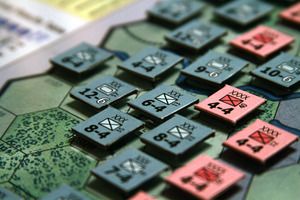
Having picked the time period already, I needed to select the scale of the game. Theater of War (ToW) has three to chose from; Strategic, Grand Tactical and Tactical. The strategic covers an estimated 4000 x 4000 sq. miles and uses the seasons, Spring, Summer, Fall and Winter for the campaign turns. This was too large for what I had in mind.Allocating a block of time in-game to resolve certain kinds of action wasn't at all uncommon in roleplaying games back in the day. Searching for rumors or a patron is a week-long activity in Traveller. Original, little brown book D&D uses the week as the basic scale of time-keeping, with one day devoted to dungeon exploration and the rest to rest and refitting: "The time for dungeon adventures considers only preparations and a typical, one day descent into the pits." A campaign turn in Boot Hill is a week or a month at the referee's discretion. The knights in Pendragon typically have one adventure per year. En Garde! turns are one week long, and the game also uses the month and the season as units of time in resolving action.
Grand Tactical covers a smaller area roughly 400 x 400 sq. miles and uses months as a campaign turn. So 12 turns equals a year. This is more in line with what I was thinking.
The tactical covers an area of 50 x 50 miles and the campaign turn is a week and the campaign ends after the 4th week or more.
The month also appears in Flashing Blades as a standard measure for resolving campaign-level action. Career commitments are measured in months, as is the time spent for gaining new skills, practicing martial skills, or pursuing minor jobs; frex, a priest's annual commitment to performing his duties is six months, with the other six months available for training, practice, pursuing another career or job, or, most importantly, adventuring. Interestingly, the time commitment for a career is flexible: "Each year, a Priest must spend six months, distributed as he likes, performing his religious duties." This gives many careers the feel of a sinecure rather than a nine-to-five job, but it's not inconsistent with how some offices were administered in l'ancien régime.
There is a significant exception to this flexibility: the military campaign. Soldiers and knights on campaign are committed for six months to action at 'the front,' which is resolved through a fun mini-game which condenses the action into three 'encounters.' These encounters begin with the risk of wounds, then may lead to a special event such as an individual battle with an enemy soldier while defending a strategic position, breaking out after being surrounded, or capturing an enemy's flag. Prisoners may be taken and ransom and booty claimed. Military campaigns are waged over six consecutive months, as determined by a die roll, and adventurers whose units are on campaign must serve. The campaign mini-game draws many FB players to military careers for their characters.
Campaign turns in wargames often condense large swathes of activity, particularly involving strategic movement and logistics. Avalon Hill's Kingmaker was a good example of this, with a player's turn involving moving his faction's nobles and their pretenders until a battle broke out or Parliament was convened, in which case the action changed to tactical level combat between forces or the negotiation and treachery of marshaling votes and declaring a king; The Rise and Fall of the Third Reich, another AH board-and-chit game, begins each turn with allocating basic resource points to simulate the logistics of production and supply, followed by strategic movement, and it's only after these are resolved that combat between fleets and armies may take place.
In a roleplaying game, campaign turns may be an opportunity for a mini-game, such as the aforementioned military campaign for Flashing Blades or the cattle drive mini-game published in Reilly Associates' Variant magazine back in the early Eighties for 2e Boot Hill, or they may be something akin to one or more sorts of montages. One could, for example, imagine a Flashing Blades' priest's six months of "religious duties" as a series of vignettes: collecting alms for the poor, praying in his cell, saying Mass, leading a saint's day procession, hearing confession, and so on.
As a referee, I often find myself asking the players something like, "Tell me what it is you want to accomplish," instead of asking for single, discrete steps - "You want to find out if Baron de Bauchery was in town, so first you'll talk to the innkeeper at the Black Swan, and after that you'll take to the innkeeper at the Roe Deer, then . . . " becomes, "So you want to make the rounds of the local inns to find out if the Baron de Bauchery was staying in town when Princess Pinkflower disappeared? Tell me how you plan to approach this." Do they offer bribes? Do they attempt to intimidate the innkeepers? Do they present themselves as allies of the baron? Smart players will use campaign turns similarly, as an opportunity to pursue long-term character development and engagement with the game-world; perhaps our FB priest will use his six months of pastoral obligation to become acquainted with a seigneur and his family, or to research conflicts between Catholics and heretics from the Wars of Religion in his parish.
Beyond a means of condensing routine, non-'adventuring' action, campaign turns also perform an important pacing function. Rising action isn't rising action with falling action for contrast, and campaign turns serve as an opportunity for the campaign to periodically catch its breath. This can help a game-world feel like a living place, where the adventurers follow seasonal rhythms or discharge their responsibilities as figures in in-game society. My first experience playing in a 3e D&D campaign found our characters climbing multiple levels in mere weeks in-game; coming directly from a 1e AD&D background, with steeper experience point requirements and rules such as required training intervals to gain levels, the effect was disconcerting. In my experience, allowing the campaign to proceed in verisimilar cycles contributes to immersion in the game-world.
Saturday, October 13, 2012
Club Life
En Garde! the 'little brown book' of cape-and-sword roleplaying games, began life as a set of tabletop miniature skirmish rules but soon took on roleplaying elements as the players wanted to know more about who their duelists were and why they were fighting, creating a social milieu for the characters.
One rules component of this milieu is gaining and losing status points. Status points represent a sort of social currency; they are essential to maintaining a character's social rank. Because the characters are swashbucklers, status points are gained and lost doing swashbuckler-y things: carousing, seducing mistresses, going to war, and so forth.
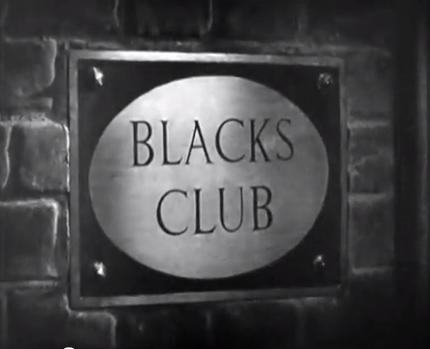 One of the means of acquiring status points is membership in a gentlemen's club. Clubs in EG are inspired by the London clubs, first established in the late 17th century and growing in number and popularity through the 18th and 19th centuries, as well as their appearance in cape-and-sword stories, such as Harold Young's The Scarlet Pimpernel. Gentlemen's clubs in En Garde! provide the players' character a place to gamble and seek feminine companionship, both of which offer status points; they also give the opportunity for toadying, which is gaining status points by hobnobbing with those of greater social status.
Like regiments and campaigns, offices and titles, EG's gentlemen's clubs were included in Flashing Blades; though they are arguably an anachronism in FB's default setting of 17th century France compared to EG's pastiche game-world, they are inspired by and emulate the genre, such as Zaton's cabaret in Stanley J. Weyman's Under the Red Robe. Unfortunately, FB's gentlemen's clubs don't really do very much else as presented: they offer a hierarchy of ranks with attendant social levels, a bit of income and the opportunity for graft, and a perq which may be awarded to other player characters or non-player characters. FB's Social Rank is tied closely to one's career and wealth, and it does not require a constant investment in status points, so one of the prime reasons for joining a club in EG is absent in FB. While a number of non-player characters are described as members of gentlemen's clubs, and clubs appear in rumors, none of the fifteen adventures published for Flashing Blades revolve around the activities of one or more of the clubs specifically. Clubs seem to exist primarily as a means for the gamemaster to introduce adventure hooks.
The incentives for joining a gentlemen's club in Flashing Blades seem too weak and poorly defined, lacking the discrete benefits offered to the adventurers in En Garde! So what should FB clubs offer?
As in EG, gentlemen's clubs in my Flashing Blades campaign are a place to carouse, gamble, and seek feminine companionship. Members of gentlemen's clubs may earn check marks in their Carousing skill - one check mark is earned for each year spent as a member of a club, which means if you eventually want to be a Master Superior in Carousing without killing your liver, a club membership is a good idea.
Gambling is another pastime associated with gentlemen's clubs in En Garde! and what little the published Flashing Blades rules and adventures say about clubs suggests this is intended to be the case in FB as well. Each club keeps a table limit, which may be exceeded only at the discretion of a manager or other officer, and gamblers are immediately forfeit membership if caught cheating other members or failing to make good on a bet - a caning from a manager may also be in order. A gambler who wins consistently, at the referee's discretion or on a roll of Luck/2 on 1D20, may be staked by the house, keeping thirty percent of his winnings with the balance going to the club - any gambler staked by the club who loses on two consecutive visits is considered to have gone cold and will no longer be staked until he returns to his winning ways.
Rules for courting a mistress may be found in the short adventure "Scavenger Hunt" in Parisian Adventure and a set of courtship house rules developed by (I think) Matthijs Krijger, owner of the Flashing Blades Yahoo group, used to be available on the intrewebs, but I've been using a kuldged-together house-ruled version of the seduction rules from Victory Games' James Bond 007: Role-Playing In Her Majesty's Secret Service for my campaign to date. Aside from using a certain notorious random encounter table to flesh out the descriptions of the clubs for my campaign, I haven't done anything special as far as locating potential mistresses other than simple random encounters. A full set of courtship rules is on my plate as a future project, however, and the role of gentlemen's clubs in meeting courtesans and the like will be folded into that.
So, on one level, this carries forward the activities of the gentlemen's clubs in En Garde! to Flashing Blades, but it's a very literal translation, devoid of nuance, in that it misses the mark as carousing, gambling, and courting are a means of maintaining one's social status in the game-world, not just entertainments for the adventurers to pursue. The way to make clubs meaningful in FB, then, is to give them a social function.
The rules for Contacts and Favors provide a useful means of integrating gentlemen's clubs into the larger social world of the characters. First, a club acts as a Contact on which a member may call. As an effective Contact of the player character, a member receives "aid" from the club "a reliable source . . . of game-world information, including rumors." Given the broad membership of a gentlemen's club, this should encompass more than a regular Contact, at the referee's discretion. The member may ask club members to exert influence of an "informal" nature on his behalf, at a Social Rank equal to that of the club's minimum requirement for membership.
Members may also request a Favor from the club. A Favor will be granted at the level of the minimum Social Rank required for membership; such a Favor is received once per year. A member may also ask for a Favor from one of the club officers - secretary, treasurer, or club chief - once; to receive a Favor from an officer, at the officer's Social Rank, the member must roll under his own Social Rank on 1D20, with the difference between the officer's SR and the member's SR as a modifier.
A Contact and an anually renewable - albeit relatively low Social Rank - Favor provides a social benefit to being in a club, and it reinforces the idea that club members are mutually supportive of one aother.
One rules component of this milieu is gaining and losing status points. Status points represent a sort of social currency; they are essential to maintaining a character's social rank. Because the characters are swashbucklers, status points are gained and lost doing swashbuckler-y things: carousing, seducing mistresses, going to war, and so forth.
Like regiments and campaigns, offices and titles, EG's gentlemen's clubs were included in Flashing Blades; though they are arguably an anachronism in FB's default setting of 17th century France compared to EG's pastiche game-world, they are inspired by and emulate the genre, such as Zaton's cabaret in Stanley J. Weyman's Under the Red Robe. Unfortunately, FB's gentlemen's clubs don't really do very much else as presented: they offer a hierarchy of ranks with attendant social levels, a bit of income and the opportunity for graft, and a perq which may be awarded to other player characters or non-player characters. FB's Social Rank is tied closely to one's career and wealth, and it does not require a constant investment in status points, so one of the prime reasons for joining a club in EG is absent in FB. While a number of non-player characters are described as members of gentlemen's clubs, and clubs appear in rumors, none of the fifteen adventures published for Flashing Blades revolve around the activities of one or more of the clubs specifically. Clubs seem to exist primarily as a means for the gamemaster to introduce adventure hooks.
The incentives for joining a gentlemen's club in Flashing Blades seem too weak and poorly defined, lacking the discrete benefits offered to the adventurers in En Garde! So what should FB clubs offer?
As in EG, gentlemen's clubs in my Flashing Blades campaign are a place to carouse, gamble, and seek feminine companionship. Members of gentlemen's clubs may earn check marks in their Carousing skill - one check mark is earned for each year spent as a member of a club, which means if you eventually want to be a Master Superior in Carousing without killing your liver, a club membership is a good idea.
Gambling is another pastime associated with gentlemen's clubs in En Garde! and what little the published Flashing Blades rules and adventures say about clubs suggests this is intended to be the case in FB as well. Each club keeps a table limit, which may be exceeded only at the discretion of a manager or other officer, and gamblers are immediately forfeit membership if caught cheating other members or failing to make good on a bet - a caning from a manager may also be in order. A gambler who wins consistently, at the referee's discretion or on a roll of Luck/2 on 1D20, may be staked by the house, keeping thirty percent of his winnings with the balance going to the club - any gambler staked by the club who loses on two consecutive visits is considered to have gone cold and will no longer be staked until he returns to his winning ways.
Rules for courting a mistress may be found in the short adventure "Scavenger Hunt" in Parisian Adventure and a set of courtship house rules developed by (I think) Matthijs Krijger, owner of the Flashing Blades Yahoo group, used to be available on the intrewebs, but I've been using a kuldged-together house-ruled version of the seduction rules from Victory Games' James Bond 007: Role-Playing In Her Majesty's Secret Service for my campaign to date. Aside from using a certain notorious random encounter table to flesh out the descriptions of the clubs for my campaign, I haven't done anything special as far as locating potential mistresses other than simple random encounters. A full set of courtship rules is on my plate as a future project, however, and the role of gentlemen's clubs in meeting courtesans and the like will be folded into that.
So, on one level, this carries forward the activities of the gentlemen's clubs in En Garde! to Flashing Blades, but it's a very literal translation, devoid of nuance, in that it misses the mark as carousing, gambling, and courting are a means of maintaining one's social status in the game-world, not just entertainments for the adventurers to pursue. The way to make clubs meaningful in FB, then, is to give them a social function.
The rules for Contacts and Favors provide a useful means of integrating gentlemen's clubs into the larger social world of the characters. First, a club acts as a Contact on which a member may call. As an effective Contact of the player character, a member receives "aid" from the club "a reliable source . . . of game-world information, including rumors." Given the broad membership of a gentlemen's club, this should encompass more than a regular Contact, at the referee's discretion. The member may ask club members to exert influence of an "informal" nature on his behalf, at a Social Rank equal to that of the club's minimum requirement for membership.
Members may also request a Favor from the club. A Favor will be granted at the level of the minimum Social Rank required for membership; such a Favor is received once per year. A member may also ask for a Favor from one of the club officers - secretary, treasurer, or club chief - once; to receive a Favor from an officer, at the officer's Social Rank, the member must roll under his own Social Rank on 1D20, with the difference between the officer's SR and the member's SR as a modifier.
A Contact and an anually renewable - albeit relatively low Social Rank - Favor provides a social benefit to being in a club, and it reinforces the idea that club members are mutually supportive of one aother.
Thursday, June 28, 2012
Honor + Intrigue Coming to Your FLGS?
Chris 'BASHMAN' Rutkowski confirmed at rpg.net that Honor + Intrigue will be appearing on the shelves of friendly local gaming stores in the future.
"The books are first going out to pre-orders while the bulk print run continues. When all the books are done, they're shipping them to the IPR Warehouse. IPR does distribute books to FLGS in the US, Canada, UK, and a number of other countries, so it ought to be available in stores at that point. However, that shipment has not gone out yet."With dedicated cape-and-sword roleplaying games like H+I and All for One: Régime Diabolique and tabletop minis games like Gloire actively supported by their publishers, classics like Flashing Blades and En Garde! still in print, and other games like Savage Worlds' Solomon Kane and Pirates of the Spanish Main and 7th Sea plus freebies like PDQ Sharp available in .pdf, it's a great time to pretend to be a swashbuckler.
Sunday, March 25, 2012
More on En Garde!
If you haven't been following perdustin's series at Thoul's Paradise on the first cape-and-sword tabletop roleplaying game, GDW's En Garde! here's a chance to catch up.
The Other Little Brown Book
The Fine Art of Pretending to Fence
The Importance of Status
Clubs and Bawdyhouses
No Friends for the Cardinal's Guard
The Vagaries of War and Fortune
If you've never heard of En Garde! and its approach to roleplaying - which includes some significant differences from the model presented by D&D - or simply want to learn more about the early history of roleplaying games, I strongly recommend giving these a look.
The Other Little Brown Book
The Fine Art of Pretending to Fence
The Importance of Status
Clubs and Bawdyhouses
No Friends for the Cardinal's Guard
The Vagaries of War and Fortune
If you've never heard of En Garde! and its approach to roleplaying - which includes some significant differences from the model presented by D&D - or simply want to learn more about the early history of roleplaying games, I strongly recommend giving these a look.
Sunday, February 26, 2012
Swashbuckling's Little Brown Book
On Thoul's Paradise, perdustin posted an introduction to "the other little brown book", En Garde! by Game Designers Workshop, the first cape-and-sword roleplaying game.
En Garde! started out as a set of rules for swashbuckling skirmishes, similar to Rapier and Dagger from FGU or Gloire from Rattrap Productions, but as a brief history of the game notes, "The players invented backgrounds to provide a reason for the duels. In short order they had individual characters in an ever more complex setting. The setting took over as the main focus of play . . . "
That setting was a Ruritania of the designers' invention, and not Musketeers-era France as perdustin suggests. That setting would strongly influence one of its successors, Flashing Blades, particularly the rules for soldier characters going on campaign and the existence of gentleman's clubs, an anachronism in the 17th century France setting of the FGU game.
I'm fascinated by the description of how the setting developed. Essentially the early players were as interested in the reasons why their characters were dueling, and they set about creating a milieu of carousing and courtship and soldiering around their characters to give them a motivation to cross swords. I've heard it suggested that En Garde! is more a skirmish game than a roleplaying game - the same criticism often leveled at Boot Hill - but I think that milieu proves otherwise. This was a social milieu rather than the more familiar dungeon/city/wilderness or subsector-full-of-star-systems settings adopted for other early roleplaying games.
I'm looking forward to reading the rest of perdustin's posts on En Garde! which I feel I should mention is still in print.
En Garde! started out as a set of rules for swashbuckling skirmishes, similar to Rapier and Dagger from FGU or Gloire from Rattrap Productions, but as a brief history of the game notes, "The players invented backgrounds to provide a reason for the duels. In short order they had individual characters in an ever more complex setting. The setting took over as the main focus of play . . . "
That setting was a Ruritania of the designers' invention, and not Musketeers-era France as perdustin suggests. That setting would strongly influence one of its successors, Flashing Blades, particularly the rules for soldier characters going on campaign and the existence of gentleman's clubs, an anachronism in the 17th century France setting of the FGU game.
I'm fascinated by the description of how the setting developed. Essentially the early players were as interested in the reasons why their characters were dueling, and they set about creating a milieu of carousing and courtship and soldiering around their characters to give them a motivation to cross swords. I've heard it suggested that En Garde! is more a skirmish game than a roleplaying game - the same criticism often leveled at Boot Hill - but I think that milieu proves otherwise. This was a social milieu rather than the more familiar dungeon/city/wilderness or subsector-full-of-star-systems settings adopted for other early roleplaying games.
I'm looking forward to reading the rest of perdustin's posts on En Garde! which I feel I should mention is still in print.
Subscribe to:
Posts (Atom)