Friday, August 31, 2012

Unleash the Spanish Fury!

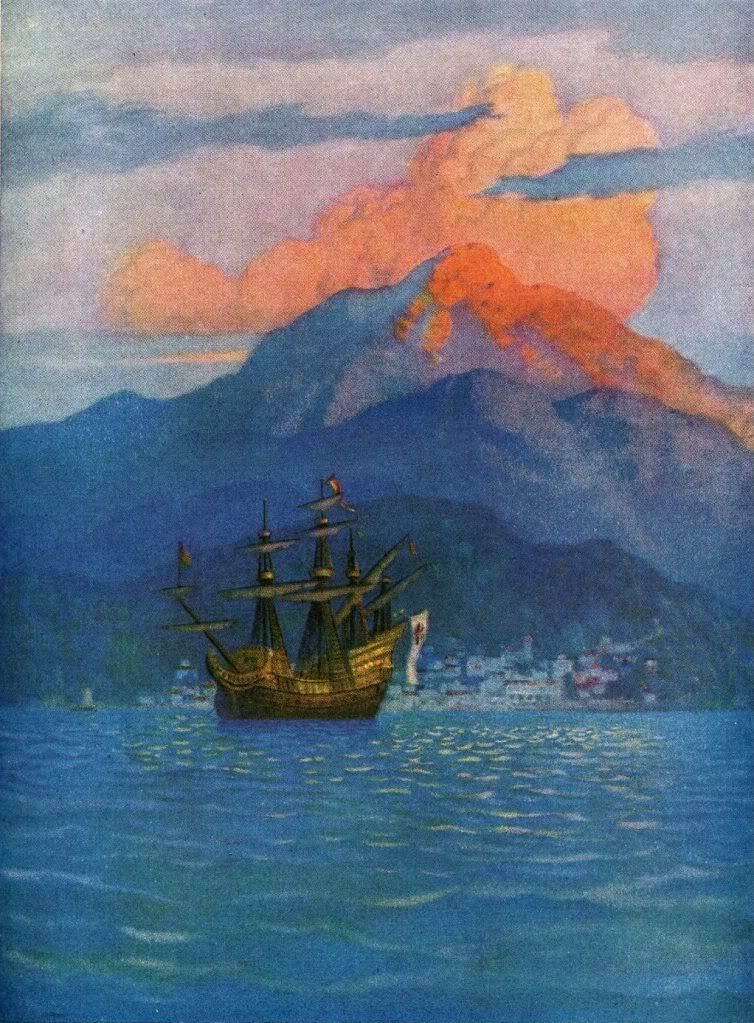
By way of Mitch Williamson at War and Game, I discovered Spanish Fury and Very Civile Actions!, a pair of sixteenth and seventeenth century wargames released by The Perfect Captain.

The Prefect Captain describes himself . . . er, itself, thus.
We are a small group of gamers with some big ideas! We like to play and design boardgames, miniatures rules, and campaign games for a host of periods. We have a yahoo group that supports our products. By the way, maybe we should mention that our goods are totally FREE!
Spanish Fury includes rules for land battles and skirmishes, sea battles, sieges, individual duels, and land and sea campaigns. In short, it promises "a complete games system, enabling players to enjoy the period in virtually every scale almost anywhere in Europe, from Portugal to Urals."

I downloaded the whole lot Thursday night, but I only had time to look at Actions!, the company-level skirmish module of Spanish Fury. The basic rules run about seventeen pages, and they are simple and clearly written - with some referencing, I felt I could play an intro scenario after a single read-through of the rules.

I'm really looking forward to digging into this. Actions!, in particular, looks like exactly what I want for use with my Flashing Blades campaign. I've been looking longingly at my Field of Glory: Renaissance books for awhile now, but Actions! is a great example of how sometimes less-is-more, ideal for running the sorts of quick'n'dirty scrapes in which the adventurers are most likely to find themselves in the course of the game. And as an added bonus, I think I could teach someone how to play in about ten minutes.

Now, there is a catch, as far as the whole "totally FREE!" thing goes. The Perfect Captain asks, in lieu of payment for their rules and counters, for a donation to charity.
Having established that, let me add the following. As gamers we like to spend our dough on stuff that helps us unwind and have a good time. Nothing wrong with that! But how about this. What if we took a portion of our hard-earned cash and gave it to someone who is going without? I think that would be pretty cool, don't you? We are NOT going to force anyone to donate to charity before they can download our games. We believe in the honour system.
They include a list of suggested charities, or donating money - and if you don't have that, a bit of time - to the charity of your choice. Mine is the restoration of a Hungarian castle, a project to protect a piece of history and provide sustainable jobs for the community.

Thursday, August 30, 2012

1e AD&D Monsters for Swashbuckling & Sorcery

So, as a coda to this little thought-experiment, I gave some thought to monsters in a swashbuckling & sorcery 1e AD&D campaign.

Given that I'm not much of a fantasy fan, my own predilection is for a humans-only campaign with very few monsters. While AD&D can certainly do such a campaign, it also rather misses one of the reasons for choosing Dungeons & Dragons in the first place. So, the question becomes, include everything or limit the selection, and if the latter, how much?

My own inclination is to limit the selection; even when I ran bog-standard pseudo-medieval D&D fantasy, I pretty severely limited the range of monsters found in the campaign world from what was available in the various monster manuals. That said, it is personal preference, not an attempt to define the genre by way of inclusion or exclusion from a selection of fantastic creatures. If you want your swashbucklers battling ankhegs and neo-otyughs, more power to you, but I'm going to take a different path.

When I think of swashbuckling & sorcery, what first comes to mind is Solomon Kane. The world of REH's Puritan swordsman is filled with degenerate men, some wielding foul magics and trafficking with foul spirits, others just plain fouled by their own corrupt natures, but it's also a world with 'real,' as opposed to metaphorical, monsters. 'Dark powers' abound, represented in AD&D terms by creatures such as demons, devils, dæmons, and other evil outer planar monsters. At low levels the adventurers might find themselves beset by imps or quasits bound to the service of a witch, frex, before graduating to more powerful fiends as they uncover sinister schemes and attract unwholesome attention as a result. Rakshasas and ogre magi - oni are perfect for this as well. Appendix D of the Dungeon Masters Guide is the ideal tool for generating unique fiends for my swashbuckling & sorcery campaign.

In fact, unique monsters, or rare groups with a limited geographic range, appeal to me. More on that in a moment.

In addition to demons et al., undead are another logical category of monstrous foes for swashbuckling & sorcery. The whole gamut of horrors may be found in the game-world, consorting with the most vile and debased among the living. Revenants and ju-ju zombies jump out at me - so to speak - as particularly fitting: the venegeful, unquiet spirit and the horrific servant of a dangerous spellcaster.

Lycanthropes fit the swashbuckling & sorcery setting well, again tapping that notion of curse-spawned corruption among men.

Now, the common theme in all of these monsters so far is that they are found in concert with humans. For me, swashbuckling & sorcery doesn't summon up an image of a world on the verge of being overrun by legions of umber hulks riding armored purple worms - rather, most monsters of the campaign exist in the shadowy corners of the world of men. This opens up another door, that of the wee folk - leprechauns, brownies, pixies, nixies, and the like - found on the fringe of human society.

The world of Solomon Kane is more than just the dusty roads, looming castles, and dark forests of Europe, but also includes the wider world as well. In my conception of the swashbuckling & sorcery campaign, I would make a distinction between monsters found in mostly 'civilised' lands, and those found in the hinterlands of terra incognita. Beyond the pale of 'civilisation' is where we find intelligent apes, sabretooth cats, giants snakes and scorpions, and dinosaurs - 'cause, y'know, PIRATES FIGHTING DINOSAURS! - as well as legendary monsters like the sphynx, the kraken, the lamia, the leucrotta, and so on. This is where the notion of unique - THE Kraken, rather than a kraken - or rare, geographically restricted creatures comes into its own. Rather than 'vampires,' frex, a single vampire with a number of servitor spawn in a forbidding castle, dwelling on its accursed state, or a kaiju-like dragon turtle which haunts a strait in some distant sea.

Finally, there are demihumans and humanoids. My personal inclination is not to include either one, but, again, that really flies in the face of the game - why bother with D&D at all, then? With respect to the latter, what few humanoids exist in my concept of the swashbuckling & sorvery game-world are found in those distant hinterlands, in steaming jungles or impassible mountains, not threatening the civilised lands of men.

That leaves demihumans, which also impacts playable races. In short, dwarves, halflings, elves, and half-orcs are shuffled off to the HUMDRUM-V while half-elves and gnomes get to ride in the FUN-V.

Why? First, gnomes are fun-loving, not terminally stodgy like dwarves and halflings - plus, Roger Moore once wrote in Dragon about playing a gnome names Cyragnome de Bergerac, so, that. I've always played gnomes not as 'tinkers' or that other Dragonlance crap, but as the playable wee folk race, similar to brownies and leprechauns. In my mind's eye I can picture a gnome duelist far more readily than a dwarf or halfling.

Elves become a monster in this campaign - my model is the evil Pharisees from Three Hearts and Three Lions, who, incidentally, also appear in Q1 - and half-elves are like changelings, the spawn of the evil elves and humans.

Half-orcs, if they exist at all, are an npc race out there in the hinterlands.

So there, a little monstrous brainstorming to wrap up 1e AD&D swashbuckling & sorcery. If I do end up running this in the future - Las Vegas is calling it 5:4 against at this point - I'll publish a more detailed list of monsters from my campaign.

Monday, August 27, 2012

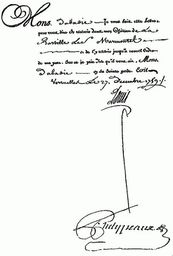
Papers, Please

Under the heading, "Reality Makes the Best Fantasy," TristanJTarwater at Troll in the Corner reflects on identification and official documentation and wonders how such things may work in a roleplaying game setting.

Though I'm running a historical setting, many of the questions are pretty challenging for me to answer; I have a general notion of how many of these things are handled from my background reading, but I'm admittedly a bit short on details.

  • What kinds of official documents and identifications are required in the area? Are there ones for nationality? For work/certain professions/guilds? Ownership? What power and function do these documents hold?
In early 17th century France, with literacy restricted to a small portion of the population, personal documentation carried by the individual is minimal. The parish church or Huguenot temple is the repository of birth and death records for most people, and guilds, confraternities, colleges, companies, and other organisations keep their own records on membership status; under their royal charters the latter are also responsible for setting their own membership standards. Royal records are maintained for purposes of controlling payrolls, frex soldiers in companies, and royal offices and commissions are recorded and documents issued to the office-holder. Courts and magistrates produce vast quantities of documentation on their official duties. Merchants and bankers keep extensive records as well, including drafts replacing specie for trade. Genealogies and armorials are important records for tracking the status and relationships of the nobility. Records of land ownership may be kept by families, churches, and royal officials, and this is one of the reasons this is so litigious.

Passports are not required for most domestic travel, while for foreign travel they serve more like letters of introduction than identification; in a pinch, seals and signatures can be checked for veracity. They may limit where a person can travel.

  • Who makes these documents? Who has access to these documents? Where are they available to obtain?
Church records are maintained by the parish priest; one of the goals of the Tridentine reforms in France is to insure literacy among the clergy. Royal records are maintained by officers and courts, and local burghers - échevins, consuls, capitouls - maintain municipal records prepared by their clerks and officers. Guilds and similar organisations keep their own records in their halls or the parish church, maintained by their secretaries. Bankers and merchants keep their own records.

  • What makes these documents ‘official’? Is there a special seal on them? A signature? Are they printed on special material or in special ink? Who has these special seals and signatures and who is trusted to be able to tell genuine articles from originals?
Seals are used to identify documents and their creators; forging seals is a serious offense, comparable to forging coins. Important documents may have a row of seals attached by ribbons.

  • Is there a cost incurred for obtaining special documents? Or are they free for anyone eligible?
I've not come across this in my reading, and it hasn't come up in game as of yet; the adventurers have been issued passports but have not tried to obtain documents of other sorts - a bribe might be required if it seems appropriate, based on circumstances.

  • Is there a certain age one must be to obtain various types of identification or that require official documentation (working papers, ID, land ownership, etc)? How does one go about proving one’s age?
Birth records maintained by the parish provide proof of age, verified by a letter from the parish priest.

  • How are officials trained to recognize documents? What are surefire signs of forgeries?
Seals and signatures are the only telltale signs for most documents, and forgeries are certainly possible - there is no foolproof method of detecting such.

  • Are there checkpoints where documents/IDs are checked? Who is guarding these locations? What are they looking for/trying to keep out?
The maréchaussée are responsible for patrolling the roads and securing the borders, and they are concerned about controlling vagrancy, suppressing banditry, and protecting the integrity of the borders. Within in the cities, this falls to royal governors and the local burghers - imagine your local councilman also being a police officer, and you get an idea of what being a consul was like in this period.

  • What kinds are things are included on personal ID documents? Pictures? Physical characteristics?
Aside from seals and one's signature, personal identification is exceedingly rare.

Snapping the Suspenders of Disbelief

My son and daughter are playing Mario Kart on the Wii. The race track for this particular race is in orbit around the Earth. Suddenly my daughter pipes up, "How come they aren't wearing space helmets? If they're in space they need helmets to breathe."

Combustion engine vehicles racing on a track floating in the deep cold and searing radiation of space? No problem. No helmets? Boggle.

The threshold beyond which our willing suspension of disbelief is exceeded varies from person to person, but as BryanMD argues at IntWisCha, "reality playing games" facilitate immersion in actual play.

Strange as it may seem, the more a story, even one that takes place outside reality, is grounded in empirical data and supported by accepted facts, the faster we'll fall into it. A story's ability to mirror the reality we've already accepted is directly proportionate to our willingness to immerse ourselves in it. You can call it believability, or connection, or familiarity, but the bottom line is getting the audience to buy into the events and emotions that are woven into the tale you tell. . . . The more 'real' one can make their story seem, the more investment others will make into it. That mutual connection seems well worth a few laps around the internet.
I've written about using both an 'Appendix N' of source literature and historical research to facilitate that suspension of disbelief. A shared understanding of fictional tropes tapped to build a game-world may contribute to verisimilitude as much as its relationship to the real world.

One of the objections from gamers I read when the subject comes up is that concerns about verisimilitude may add to the referee's burden of preparation in exchange for very little actual play return. BryanMD disagrees, citing the example of James Cameron, at the suggestion of astrophysicist Neal DeGrasse Tyson, changing a starfield in Titanic to correspond to the actual stars visible from the ship at the time of the scene.

When I hear stories like those above, my instincts scream "NERD!" at the top of their psychological lungs. To hold a fictional film to such a rigid empirical standard seems dishonest, and carries the potential to damage one's enjoyment of the experience. Why would anyone inflict this intense scientific scrutiny on a leisure past time? These questions burn in my brain; and then I'm reminded of my own factoid fixation when it comes to RPGs.

Did it really matter in my fan fiction that the constellations my Half-elf Ranger was said to be looking at could actually be viewed from his geographical location on Earth? . . . Was it so important to discover which heavy metal, readily available in the late 19th century, had the highest density and therefore the highest relative weight by volume for use in a potion? . . . Can the need really exist to research the descendants of a dead Puritan preacher to find out if any of them actually ended up in England, or check Google Maps to find out if the London church my character attends is within walking distance of her family home near Picadilly Circus? . . . There are a myriad of other examples I could give, but all of them follow the same formula: "Do I really need to know ________ in order to have fun playing __________?" Curiously, all of them have the same conclusion: "Who cares? I looked it up anyway."
A few days ago I found myself reading about the battle of Alcácer Quibir as background for a Portuguese nobleman in Spanish service, an npc who, if he is spared in the course of actual play, may become an important figure in the Portuguese Restoration in 1641.

That's about fifteen in-game years in the future in our campaign, by the way.

It's really not hard to look at that and agree with those who see this level of detail, which is largely invisible to the players and may never even come up in play, as a waste of time. While this bit of background does help me to roleplay the character by helping me to understand his motivations, and perhaps increase the players' level of immersion in the events of the campaign, there's another underlying reason.

It's fun.

I like reading history, and like many people who enjoy history, I like daydreaming about what-ifs. Speculating how this seminal event in the history of his family and his kingdom may impact the mindset of a proud young soldier is a pleasant diversion in its own right, as well as contributing in some small but potentially significant way to the campaign. One of the joys of running a sandbox is placing something in the game-world with no concrete idea how it may come into play, and Don Carlos de Nivero is just such a feature of the campaign.

For a another look at suspension of disbelief, check out two posts by Nick at Troll in the Corner as well.

Saturday, August 25, 2012

Consequential

It occurred to me: there's lots of talk about the vaunted sandbox campaign and its virtues. I'm a believer in giving players lots of plot hooks to follow and freedom of choice, etc. I do believe in the idea of the sandbox and all the "player agency" goodness that is supposed to come with it.

But as far as I can see, there's not a lot of talk on the RPG blogosphere about the consequences of player actions. There's a lot of talk about letting players do what they want, but I haven't read much in the way of follow-through when it comes to the repercussions of player actions.
So writes Drance at Once More Unto the Breach! In his search for consequences, he ends his post with a list of four questions.

  • What do you think of player agency/sandbox play and consequences?
In a post on swashbucklers' sandboxes last February, I wrote, "And that last touches on my final point, that the sandbox must react to the actions of the adventurers. The player characters' actions - and sometimes their failures to act - carry consequences. My simple rule is this: if the adventurers are winning, someone else is losing, and that someone may choose to do something about it. . . . Earning a friend may mean making that friend's enemies the adventurers' own as well, and if that holds true, then the enemies of their enemies may offer alliances as well. A swashbuckler's sandbox is marked by a dynamic tension as the adventurers tug, or simply brush against, the web of relationships they encounter in the game-world."

To expand on this a little, the "dynamic tension" I described drives the action in actual play. This is true to some degree in everything I run, but it's particulaly relevant to my current campaign in which 'hexcrawling' the game-world means encountering and exploring the relationships between characters, building and uncovering alliances and conducting and exposing intrigues in pursuit of goals, both personal and professional. Conflicts arise out of the interplay of personalities and pursuits, and a fair amount of my time and responsibility as referee is keeping track of these evolving relationships.

  • Do you have any examples of such cause and effect in your own gaming experiences?
Like most sandboxes, my present campaign, Le Ballet de l'Acier (The Steel Ballet) for Flashing Blades, is driven by the decisions of the players and their characters. Like ripples in a pond encountering rocks and reeds, their actions are reflected back to them in increasingly complex patterns.

A random encounter with a pair of duelists by one of the adventurers produced both an unexpected potential ally and a bitter foe eager to cover up his dishonrable conduct; the players and their characters suspect that this duelist is behind two attempts on their lives, an ambush by bravos and a gift of poisoned wine. In fact, authorities in Grenoble are investigating the attempts on the adventurers' lives.

Another random encounter resulted in saving a duchess and her English lover from a gang of bravos; the duchess remembers her discrete saviors and may call upon them again in the future.

An attempt to court a lady-in-waiting resulted in a duel gone sideways, and the adventurers found themselves exiled from Paris after they were defended before the king by the captain-lieutenant of the King's Musketeers.

Exemplary service on campaign in Savoy earned the adventurers recognition, and with that recognition came offers to capture a castle from a Spanish-sympathiser in Dauphiny, join a company of mercenaries, and ransom a captured nobleman; they undertook the last, but came away empty-handed, and instead of riches and rewards (including the offer of a knighthood from the duke of Savoy!), the adventurers are about to find themselves peremptorily dismissed for their pains. The captive charged the adventurers with protecting his wife and family, however, and should the adventurers choose to take this on - or not - their decision will carry consequences they may not, or perhaps cannot, foresee at the moment.

And then there is the matter of Cardinal Richelieu's interest in them, and the fallout of two other duels, and lovers to be courted . . .

So yes, I have a few examples.

  • Have you ever roleplayed where you found yourself in a consequence-free environment?
A Traveller campaign, a merchant ship operating well beyond the Imperial border. Hijackers attempt to take the ship while departing from a backwater independent system with no space force of its own; in fact, the planetary laws end at the edge of the atmosphere.

So there is literally no legal entity with jurisdiction other than the crew.

Two of the crew want to immediately space the captured hijackers; one objects strenuously to what she considers murder. The conflict between the characters is in fact mirrored by the players, and a very genuine argument ensues.

Finally, it's decided to hold a trial, in which the hijackers are convicted and sentenced to death by vote of 3-1. A deadock would've resulted in acquittal; instead, the hijackers are placed in a drug-induced coma, then spaced.

  • Have I missed other blogs that talk about consequences stemming from player agency/sandbox play?
I can't think of other blog posts off-hand, but among some of the 'old-school' posters at forums like theRPGsite and Knights and Knaves Alehouse, it's pretty common advice to those who mistake 'status quo' for 'suspended animation.'

For more answers to these questions, check out Eric Treasure's response at The Dragon's Flagon as well.

Addendum: Jedediah at Book Scorpion's Lair posted a reply as well.