
Wednesday, November 28, 2012

Tuesday, November 27, 2012
The Thing With the Guy In the Place
Look, we all go way back and I owe you, from the thing with the guy in the place, and I'll never forget it. - Reuben, Ocean's ElevenMy approach to creating and running a sandbox means putting lots of balls in the air at once. I've used the traditional dungeon and megadungeon as analogs for the social relationships, factions, and intrigues which provide the focal point for action in my campaign, and like a vast labyrinth of corridors, rooms, tunnels, and caverns, the intricacy of those complex relationships et al. becomes apparent the more the adventurers explore. Keeping it all straight requires some real effort on my side of the screen.
So, what about the players?
In a dungeon crawl, the players and their characters are likely working from an actual map, created as they explore; it is more-or-less - hopefully more! - a representation of what the referee sees on his side of the screen. Virtually every map I recall was covered with annotations, descriptions of monsters and traps and treasure left behind, names of characters, records of battles lost and won. The map which we produced in play was our record not only of the physical space but of events and interactions as well. But our campaign doesn't generate a physical location map of the sort with which dungeon explorers are accustomed, so that's meant looking for other ways to keep them up to speed.
First, our adventure logs provide a record of the events of the game. The wiki format allows me to link to the pages of characters the adventurers meet and locations they visit, immediately cross-referencing 'the guy' and 'the place' with 'the thing.' We've referenced the logs a few times during play, when memories around the table proved hazy. The adventure logs are composed from the notes I keep as we play, and they are checked by the players to make sure I didn't miss anything important to them.
I also use ability checks - roll under Wit on 1D20, usually - as a means of a determining something a character might know about the setting, or to recall a detail that the player is struggling to remember. The characters in my campaign aren't explorers in a post-apocalyptic wasteland - much is known and knowable to their characters without the need for first-hand discovery, so giving the players a roll to determined if their character knows a fact, based on background, skills, or career, is a reasonable way to represent the depth and breadth of their of their characters' experience.
Finally, I tried to build a relationship map for all of the non-player characters of the game-world, but neither writing it out by hand nor using any of the different software programs at my disposal was feasible - there are simply too many relationships for me to manage graphically, and it's not really all that helpful compared to the other options that the wiki provides for managing the many connections between characters. A relationship map is, on the other hand, perfectly feasible to produce specifically for the player characters, to diagram the relationships which they've created in the course of their adventures. I'm using Dia to produce this relationship map. The first draft simply shows the people with whom they've interacted so far, but I'm working on a second draft which includes organisations and places as well, which is proving a bit more of a challenge to create visually than I'd hoped - when it's done, I hope to be able to present them with a 'map' of the 'social dungeon' they've been exploring.
Monday, November 26, 2012
Right But Repulsive
Gonsalvo at Blunders on the Danube trots out - literally - his ECW Parlamentary cavalry to celebrate Thanksgiving with a nod to the Puritans.
I'd love to see these two armies arrayed against one another.
I'd love to see these two armies arrayed against one another.
Sunday, November 25, 2012
DVR Alert
And the swashbucklers keep on comin' this week, with TCM airing the 1934 version of Treasure Island, starring Wallace Beery as Long John Silver, on Tuesday, 27 November.
And while not strictly a swashbuckler, TCM is also showing Ivanhoe, starring Robert Taylor and Elizabeth Taylor, the same day. Are you on Team Rebecca, or Team Rowena?
Check you local listing for times, as always.
And while not strictly a swashbuckler, TCM is also showing Ivanhoe, starring Robert Taylor and Elizabeth Taylor, the same day. Are you on Team Rebecca, or Team Rowena?
Check you local listing for times, as always.
Friday, November 23, 2012
DVR Alert
Turner Classic Movies offers three reasons to wake from a food coma this weekend.
On Saturday, 24 November, TCM is showing Michael Curtiz's unforgettable The Adventures of Robin Hood, starring Errol Flynn, Olivia de Havilland, and Basil Rathbone.
On Sunday, 25 November, they follow up with two great Ray Harryhausen movies, The Golden Voyage of Sinbad and Sinbad and the Eye of the Tiger. Golden Voyage, with John Phillip Law and Caroline Munro, is by far the better of the two, in my humble opinion, but Jane Seymour makes Eye of the Tiger worth watching.
Check your local listings for times, as always.
Check your local listings for times, as always.
Thursday, November 22, 2012
Off the Shelf: Philosophy Texts
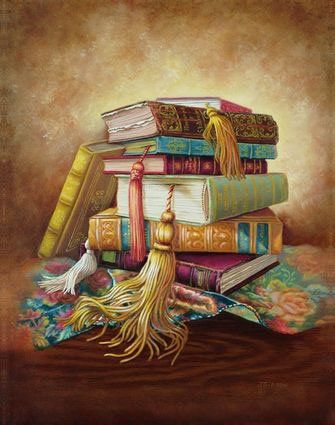
From time to time adventurers may find themselves in libraries and other places where books can be found. Some players will want to know exactly what's on those shelves, so with that in mind, Off the Shelf consists of lists of book titles for the referee to use in rolling or choosing exactly what the adventurers find.
1. Novum Organum, Francis Bacon, Viscount St. Alban
2. Essais, Michel de Montaigne
3. De animae immortalitate, Giovanni Pico della Mirandola
4. Horae Subsecivae, Anonymous*
5. Quod nihil scitur, Francisco Sanches
6. Quaestiones celeberrimae in Genesim, Marin Mersenne
7. Apologia compendiaria fraternitatem de Rosea Cruce suspicionis et infamiae maculis aspersam, veritatis quasi Fluctibus abluens et abstergens, Robert Fludd
8. De incertitudine et vanitate scientiarum atque artium declamatio invectiva, Heinrich Cornelius Agrippa
9. Theologia Platonica de immortalitate animae, Marsilio Ficino
10. Civitas Solis, Tommaso Campanella
11. Disquisitionum magicarum libri sex, Martin del Rio
12. De l'Infinito Universo et Mondi, Giordano Bruno
13. De optimo reip. statv, deque noua insula Vtopia, libellus uere aureus, nec minus salutaris quam festiuus, Sir Thomas More
14. Les Six livres de la République, Jean Bodin
15. De hominis dignitate, Giovanni Pico della Mirandola
16. Il Principe, Niccolò Machiavelli
17. Della ragion di Stato, Giovanni Botero
18. Bewijs van den waren Godsdienst,** Hugo Grotius
19. Discorsi sopra la prima deca di Tito Livio, Niccolò Machiavelli
20. De Constantia Libri Duo, Qui alloquium praecipue continent in Publicis malis, Justus Lipsius
* Attributed to Thomas Hobbes
** Published in Latin as De veritate religionis Christianae
A final note: most of the books in this list were published prior to 1630, reflecting Renaissance rather than many more famous Early Modern philosophers - I'll add another list or two for later in the 17th century in the future.
1. Novum Organum, Francis Bacon, Viscount St. Alban
2. Essais, Michel de Montaigne
3. De animae immortalitate, Giovanni Pico della Mirandola
4. Horae Subsecivae, Anonymous*
5. Quod nihil scitur, Francisco Sanches
6. Quaestiones celeberrimae in Genesim, Marin Mersenne
7. Apologia compendiaria fraternitatem de Rosea Cruce suspicionis et infamiae maculis aspersam, veritatis quasi Fluctibus abluens et abstergens, Robert Fludd
8. De incertitudine et vanitate scientiarum atque artium declamatio invectiva, Heinrich Cornelius Agrippa
9. Theologia Platonica de immortalitate animae, Marsilio Ficino
10. Civitas Solis, Tommaso Campanella
11. Disquisitionum magicarum libri sex, Martin del Rio
12. De l'Infinito Universo et Mondi, Giordano Bruno
13. De optimo reip. statv, deque noua insula Vtopia, libellus uere aureus, nec minus salutaris quam festiuus, Sir Thomas More
14. Les Six livres de la République, Jean Bodin
15. De hominis dignitate, Giovanni Pico della Mirandola
16. Il Principe, Niccolò Machiavelli
17. Della ragion di Stato, Giovanni Botero
18. Bewijs van den waren Godsdienst,** Hugo Grotius
19. Discorsi sopra la prima deca di Tito Livio, Niccolò Machiavelli
20. De Constantia Libri Duo, Qui alloquium praecipue continent in Publicis malis, Justus Lipsius
* Attributed to Thomas Hobbes
** Published in Latin as De veritate religionis Christianae
A final note: most of the books in this list were published prior to 1630, reflecting Renaissance rather than many more famous Early Modern philosophers - I'll add another list or two for later in the 17th century in the future.
Subscribe to:
Posts (Atom)